If you want to drive a horsebox with a Maximum Authorised Mass (MAM) of more than 3,500kg, you will normally need Category C1 or Category C entitlement.
Getting a horsebox licence involves several stages, including a medical examination, applying for provisional entitlement, passing theory tests, completing practical training and passing two practical driving tests.
The process can seem complicated at first, but it is much easier to understand when you break it down step by step.
How to get a horsebox licence at a glance
To gain Category C1 or Category C entitlement, you will normally need to:
- Choose which horsebox licence you need
- Complete an HGV medical
- Apply for provisional entitlement
- Pass the HGV theory tests
- Complete practical driver training
- Pass the Part 3a off-road exercises test
- Pass the Part 3b on-road driving test
- Receive your updated driving licence
You must normally already hold a full Category B car licence before adding C1 or Category C entitlement.
If you're not yet sure whether you actually need C1 or Category C, start with our guide to what horsebox you can drive on your licence.
Step 1: Choose between Category C1 and Category C
Before applying, work out which licence category you need.
Category C1
Category C1 allows you to drive vehicles with a MAM of more than 3,500kg and up to 7,500kg, with a trailer up to 750kg MAM.
For horse owners, that can cover many:
- 4.5 tonne horseboxes;
- 5 tonne horseboxes;
- 6.5 tonne horseboxes; and
- 7.5 tonne horseboxes.
Category C
Category C allows you to drive vehicles with a MAM of more than 3,500kg, including larger horseboxes above 7,500kg.
It also allows you to drive vehicles within the C1 weight range.
You do not need to pass C1 before taking Category C. If you already hold a full car licence, you can choose to train directly for Category C.
For some drivers, C1 provides all the entitlement they will ever need. Others decide to go straight to Category C because it gives them more flexibility if they move to a larger horsebox in the future.
If you're deciding which route makes most sense for you, read our C1 vs Category C horsebox licence guide for a more detailed comparison of the two options.
Step 2: Complete an HGV medical
Before applying for provisional C1 or Category C entitlement, you will normally need to complete a medical examination.
The results are recorded on a D4 medical examination report.
The medical is designed to check that you meet the higher health and eyesight standards required for drivers of larger vehicles.
It can cover areas including:
- eyesight;
- your medical history;
- medication you take;
- conditions that may affect your ability to drive safely; and
- your general fitness to drive a larger vehicle.
The D4 form must be completed by a doctor.
This can be:
- your own GP; or
- a private company specialising in driver medical examinations.
An optician or optometrist may also need to complete the eyesight section if the doctor cannot provide all the required information.
Your GP, optician or private medical provider may charge for this service, so check the price before booking.
Having a medical condition does not automatically prevent you from getting C1 or Category C entitlement. DVLA will assess whether you meet the relevant medical standards and may ask for further information if necessary.
Step 3: Apply for provisional C1 or Category C entitlement
Once your medical is complete, the next step is to apply to DVLA for provisional entitlement.
You will normally need:
- a D2 application form;
- your completed D4 medical examination report; and
- your current photocard driving licence.
D2 and D4 forms are available from Post Offices that provide DVLA services.
You then send the completed forms and your driving licence to DVLA.
There is currently no DVLA application fee for adding provisional lorry entitlement, although you will normally have paid separately for your medical.
DVLA says you should usually receive your licence back within around three weeks of it receiving your application, although it can take longer if your health or personal details need to be checked.
When your licence comes back, check that the correct provisional entitlement has been added before moving on to your tests.
What happens if I apply for provisional Category C?
Applying for Category C gives you additional provisional entitlements, including C1.
This means you do not need to obtain a provisional C1 licence and pass C1 before progressing to Category C.
That is why it is worth deciding whether C1 or Category C is the right long-term option before beginning your training.
Step 4: Pass the HGV theory tests
Once you have your provisional entitlement, you can take the theory tests required for your C1 or Category C licence.
The driving-licence theory stage has two parts:
- multiple-choice questions; and
- hazard perception.
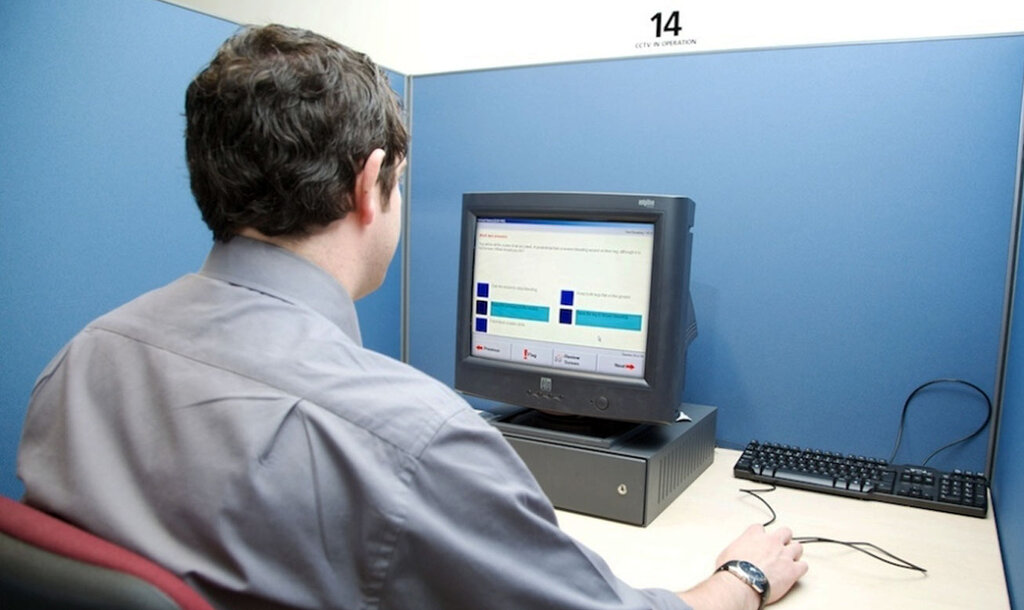
The two tests are booked separately, although you can take them on the same day.
You can complete them in either order, but you need to pass both within two years of each other to receive your theory-test certificate.
Multiple-choice test
The multiple-choice test checks your knowledge of driving larger vehicles.
Topics can include:
- road signs and markings;
- safe driving;
- vehicle weights;
- braking and stopping distances;
- vehicle safety;
- drivers' hours;
- road and weather conditions; and
- the particular risks involved in driving larger vehicles.
There are 100 questions, and you need at least 85 correct answers to pass.
Hazard-perception test
The hazard-perception test uses video clips showing developing hazards.
You need to identify situations that may require you to take action, such as:
- a vehicle pulling out;
- pedestrians approaching the road;
- traffic slowing suddenly; or
- another developing road hazard.
The pass mark is 67 out of 100.
Once you have passed both parts, your theory-test certificate is valid for two years. You must pass the relevant practical tests within that period or you will need to take the theory tests again.
This article gives you the overall process, but if you're preparing for the tests, our guide to what to expect during your HGV theory and practical tests goes into the test format, pass marks and preparation in more detail.
Step 5: Complete practical horsebox licence training
Once you have the necessary provisional entitlement and are ready for the practical stage, you will need training in an appropriate vehicle for the category you are taking.
A training provider will normally assess your current driving ability and recommend how much tuition you need.
Your practical training may include:
- getting used to the size and weight of the vehicle;
- effective mirror use;
- positioning on the road;
- turning at junctions;
- negotiating roundabouts;
- speed management;
- braking;
- clearance from parked vehicles and obstacles;
- reversing;
- vehicle-safety checks; and
- driving on different types of road.
One of the biggest changes when moving from a car to a large vehicle is the need to plan further ahead.
A heavier vehicle needs more room to turn, more distance to slow down and greater awareness of its position on the road.
You will often train in the same or a similar vehicle to the one used for your practical tests.
How much horsebox licence training will I need?
There is no fixed amount of practical tuition that suits every learner.
The amount you need can depend on:
- your previous driving experience;
- how quickly you adapt to a larger vehicle;
- whether you're taking C1 or Category C;
- the training provider; and
- how intensive the course is.
Training costs therefore vary considerably.
Before booking, check exactly what is included in the course price, including training time, test bookings, vehicle hire and any retest fees.
For a fuller breakdown of typical course prices and timescales, read our guide to horsebox HGV training costs and course lengths.
Step 6: Pass the Part 3a off-road exercises test
The first practical test is Part 3a, the off-road exercises test.
For C1 or Category C without a trailer, this includes a reversing exercise carried out away from public roads at an approved testing or training site.
You need to show that you can safely control and position the vehicle during the manoeuvre.
Part 3a normally takes up to around 30 minutes.
You must have passed the relevant theory tests before taking Part 3a.
What happens after I pass Part 3a?
If you pass, you receive a certificate that you need for your Part 3b on-road test.
You must pass Part 3b within six months of passing Part 3a.
If you do not pass Part 3b within that period, you will need to take Part 3a again.
Step 7: Pass the Part 3b on-road driving test
The final driving test is Part 3b, the on-road practical test.
It assesses whether you can drive a large vehicle safely and independently in normal road conditions.
The test includes vehicle-safety questions and practical road driving.
You will also complete around 10 minutes of independent driving, during which you need to demonstrate that you can make safe driving decisions without relying constantly on directions from the examiner.
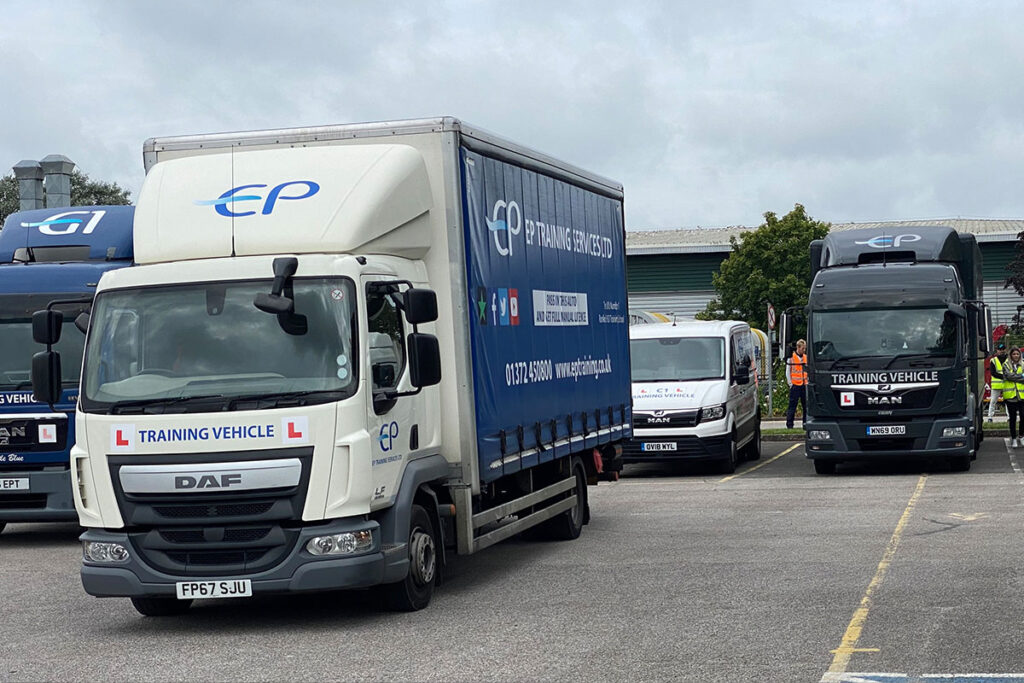
The examiner will assess areas including how safely you:
- use the vehicle's controls;
- use your mirrors;
- position the vehicle;
- move away and stop;
- approach junctions and roundabouts;
- manage your speed;
- respond to hazards;
- plan ahead; and
- make independent decisions.
How many faults can I make on the HGV driving test?
You can pass with 12 or fewer driving faults, provided you do not make a serious or dangerous fault.
The aim is not to drive perfectly.
The examiner needs to see that you can control the vehicle safely, observe effectively, plan ahead and avoid creating unnecessary risk for other road users.
Our HGV theory and practical test guide explains Part 3a and Part 3b in more detail, including what examiners are looking for and what happens if you fail.
Step 8: Receive your full C1 or Category C entitlement
Once you pass the practical test, your new vehicle category can be added to your driving licence.
You can then drive vehicles covered by that entitlement, subject to any restrictions on your licence and any other legal requirements that apply.
Passing your C1 or Category C test gives you the necessary driving-licence entitlement.
It does not automatically mean that every type of horsebox journey is covered by the same rules.
Depending on how the vehicle is being used, you may also need to consider:
- Driver CPC;
- operator licensing;
- drivers' hours and tachograph requirements;
- animal transport rules;
- appropriate insurance;
- vehicle testing and plating; and
- vehicle and payload limits.
For someone driving their own horse privately, many of the professional transport requirements will not apply. For commercial or work-related use, additional rules may be relevant.
Do I need Driver CPC as part of getting a horsebox licence?
Not necessarily.
Driver CPC is separate from the C1 or Category C driving-licence entitlement itself.
If you are gaining C1 or Category C to drive your own horsebox for private, non-commercial use, you will not normally need the full Driver CPC qualification.
You will still normally need:
- Part 1 – theory tests;
- Part 3a – off-road exercises; and
- Part 3b – on-road driving.
Drivers who need the full initial Driver CPC qualification for professional driving may also need:
- Part 2 – case studies; and
- Part 4 – practical demonstration.
Whether Driver CPC applies depends mainly on how and why you are using the horsebox, not simply whether you have C1 or Category C entitlement.
Our dedicated guide to Driver CPC for horsebox drivers explains the rules for private owners, grooms, riders, trainers, professional transporters, farms and studs in more detail.
How much does it cost to get a horsebox licence?
There is no single fixed price for gaining C1 or Category C entitlement.
Your total cost can include:
- the medical;
- theory tests;
- practical training;
- Part 3a and Part 3b test fees;
- use of the training vehicle;
- additional training if required;
- retests; and
- Driver CPC tests if you need the professional qualification.
Category C courses can cost more than C1, but prices vary significantly between providers and regions.
When comparing training providers, look at the total package cost, not just the advertised daily training rate.
Our guide to horsebox HGV training costs gives a more detailed breakdown of what you can expect to pay and how long training usually takes.
How long does it take to get a horsebox licence?
There is no fixed timescale.
The total process depends on factors including:
- how quickly you arrange your medical;
- DVLA processing time;
- theory-test availability;
- how quickly you pass the theory tests;
- training-course availability;
- how much practical tuition you need; and
- practical-test availability.
The actual practical training itself may take place over several consecutive days or be spread over a longer period.
Completing your medical and provisional application early can help prevent avoidable delays later in the process.
For typical training durations and examples of what can affect the overall cost and timescale, see our horsebox HGV training cost and duration guide.
Do I need a horse in the vehicle during my HGV test?
No.
Your C1 or Category C lessons and practical tests are completed in an approved training vehicle without a horse on board.
The tests are designed to assess whether you can control and drive the vehicle safely.
Once you have passed, it is sensible to build up experience gradually before transporting a horse.

Driving with a horse on board requires particularly smooth:
- acceleration;
- braking;
- gear changes; and
- cornering
to help the horse remain balanced and comfortable.
Before your first journeys, make sure you are also familiar with the safety checks and loading requirements for your horsebox.
What happens if I fail one of the tests?
Failing one test does not mean you need to restart the whole licensing process.
If you fail a theory or practical test, you can book another attempt.
Your test result should identify areas that need improvement, allowing you and your training provider to focus on them before your next attempt.
Bear in mind that some test certificates have time limits.
For example:
- the two theory-test parts need to be passed within the required period;
- your theory certificate is valid for two years for completing the practical tests; and
- Part 3b must be passed within six months of passing Part 3a.
Understanding these deadlines can help you plan training and retests without having to repeat stages unnecessarily.
What horsebox can I drive once I've passed?
That depends on which category you have gained.
With Category C1, you can drive vehicles over 3,500kg and up to 7,500kg MAM.
With Category C, you can drive vehicles over 3,500kg, including those above 7,500kg.
The vehicle's MAM, rather than what it happens to weigh on a particular journey, is what matters when determining the licence category.
If you want a complete explanation of Category B, C1 and Category C entitlement - including pre-1997 driving rights and the rules for qualifying zero-emission horseboxes - read our guide to what horsebox you can drive on your licence.
Before driving your horsebox for the first time
Passing the test is only the beginning.
Before taking your horse out on the road, make sure you understand:
- the horsebox's MAM;
- its available payload;
- how much your horses, passengers and equipment weigh;
- daily vehicle-safety checks;
- MOT or annual-testing requirements;
- tyre condition and pressures;
- loading and securing horses safely; and
- any additional rules that apply to professional or commercial transport.
Moving from a training vehicle to your own horsebox can also take some adjustment, particularly if its size, transmission, visibility or handling are different.
Give yourself time to become familiar with the vehicle before making a demanding journey with horses on board.
Find horsebox licence training near you
Ready to start your C1 or Category C training?
Use Horsemart's HGV training-centre directory to find a horsebox licence training provider near you.
A specialist training centre can help you:
- choose the right licence category;
- understand the application process;
- prepare for your practical tests; and
- arrange suitable C1 or Category C driver training.
This guide covers the licensing process in England, Scotland and Wales. A separate process applies in Northern Ireland.
Requirements can also vary depending on how your horsebox is used, so always check your current driving entitlement and the latest official guidance before driving.