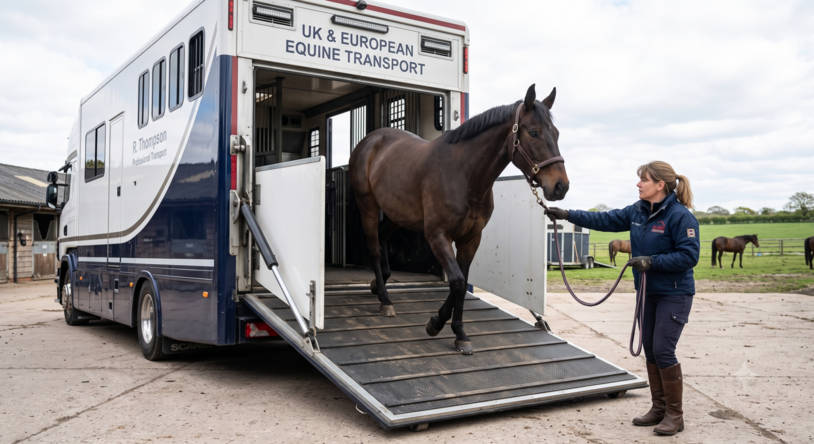
Starting a professional horse transport business involves more than buying a horsebox and holding the correct driving licence.
Depending on the vehicle you use and the journeys you offer, you may need:
- The correct driving licence and Driver CPC
- An animal transport certificate of competence
- A transporter authorisation
- Vehicle approval for longer journeys
- A goods vehicle operator’s licence
- Commercial insurance
- A tachograph and drivers’ hours records
- A planned vehicle-maintenance system
The exact requirements depend on:
- The weight of your horsebox
- Whether you transport your own horses or customers’ horses
- The distance and length of each journey
- Whether you travel within the UK or abroad
- Whether driving is the main part of your job
This guide explains the main stages and what each document is for.
Professional horse transport requirements at a glance
| Requirement | When it may be needed |
| Category B, C1, C or CE licence | Depends on the horsebox’s maximum weight and whether you tow a trailer |
| Driver CPC | Usually required when driving professionally is the main part of your job |
| Animal transport certificate of competence | Commercial horse journeys of more than 65km by road |
| Type 1 transporter authorisation | Commercial animal journeys over 65km and up to eight hours |
| Type 2 transporter authorisation | Commercial animal journeys lasting more than eight hours |
| Vehicle approval certificate | Horse journeys lasting more than eight hours |
| Operator’s licence | Usually required for commercial use of a horsebox or combination over 3,500kg |
| Tachograph | Usually required for a horsebox or vehicle combination over 3,500kg |
| Planned safety inspections | Required as part of operating and maintaining a commercial vehicle safely |
| Commercial insurance | Your motor policy must cover the actual business use |
Not every transporter will need every item. However, you should confirm your position before advertising or accepting paid bookings.
Step 1: Decide what transport service you will offer
Your planned service will affect almost every licence and certificate you need. Before applying for anything, decide:
- Will you transport your own horses, other people’s horses or both?
- Will customers pay you directly for transport?
- Will transport be included within another paid service?
- Will you operate only within the UK?
- Will you travel to Europe or elsewhere?
- Will journeys normally be under or over 65km?
- Could any journeys last longer than eight hours?
- What size horsebox will you use?
- Will you employ other drivers or attendants?
Commercial transport can include direct or indirect payment. It may also include using a horsebox in connection with another business, rather than charging a separate transport fee. Working these details out first makes it much easier to identify the correct documents.
Step 2: Hold the correct driving licence
The driving licence you need depends on the horsebox’s maximum authorised mass, usually shortened to MAM.
MAM is the most the vehicle is legally allowed to weigh when fully loaded. As a general guide:
- Category B: Horseboxes with a MAM of up to 3,500kg
- Category C1: Horseboxes with a MAM of more than 3,500kg and up to 7,500kg
- Category C: Rigid horseboxes with a MAM of more than 3,500kg, including those over 7,500kg
- Category C1E: A C1 vehicle towing a trailer over 750kg
- Category CE: A Category C vehicle towing a trailer over 750kg
A horsebox with a MAM above 3,500kg will normally require an HGV licence. You do not need to take C1 before Category C. You can train directly for Category C if you want to drive larger horseboxes or have more flexibility.
Step 3: Check whether you need Driver CPC
Driver CPC is a professional driving qualification. It is separate from the animal transport certificate of competence discussed later in this guide. If driving a horsebox will be the main part of your job, you will usually need the full Driver CPC.
As a new professional driver, this normally involves:
- Part 1: multiple-choice and hazard-perception theory tests
- Part 2: case-studies test
- Part 3a: off-road exercises
- Part 3b: on-road driving test
- Part 4: practical demonstration test
After qualifying, you normally need to complete 35 hours of periodic Driver CPC training every five years to continue driving professionally. Some exemptions can apply when driving is not the main part of someone’s job, but a professional transporter should not assume an exemption applies. Explain your planned work clearly to your training provider before booking your tests.
Three different qualifications that are easily confused
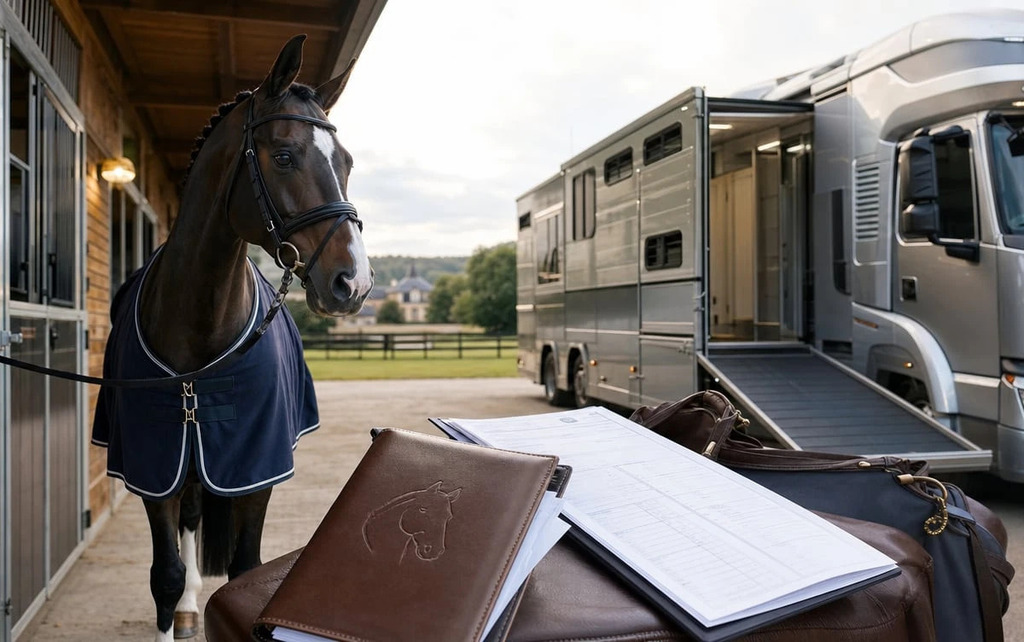
Professional horse transporters may come across three qualifications containing the words “CPC” or “competence”. They are not the same.
Driver CPC
This qualifies someone to drive a lorry professionally.
Animal transport certificate of competence
This shows that someone has been trained and assessed in the welfare and handling of animals during transport.
Transport Manager CPC
This is a professional qualification for someone managing vehicles under a standard operator’s licence.
Depending on your business, you could need all three.
Step 4: Get an animal transport certificate of competence
You must have an animal transport certificate of competence when transporting horses by road in connection with an economic activity on journeys of more than 65km. The certificate is specific to:
- The species you transport
- Whether you are the transporter or an attendant
- The length of journey you are qualified to undertake
If an attendant travels with you and is directly responsible for the horses’ welfare, they must also hold the appropriate certificate. You can obtain the qualification through an accredited training and assessment provider. Current recognised providers include:
- City & Guilds Land Based Services
- Lantra
- 1st4sport for horses and other equines
You must carry a copy of the certificate while transporting horses and make it available if requested.
Is this the same as Driver CPC?
No. The animal transport certificate covers animal welfare during transport.
Driver CPC covers professional lorry driving. Completing one does not automatically give you the other.
Step 5: Apply for transporter authorisation
You will also need a transporter authorisation if you transport animals in connection with an economic activity on journeys of more than 65km. There are two types.
Type 1 transporter authorisation
A Type 1 authorisation covers journeys:
- Over 65km
- Lasting no more than eight hours
Type 2 transporter authorisation
A Type 2 authorisation is needed for journeys lasting more than eight hours.
Transporter authorisations are issued by the relevant animal-welfare authority. In England and Wales, applications are handled by the Animal and Plant Health Agency’s Welfare in Transport Team. Authorisations are valid for up to five years. You must carry a copy during relevant journeys and make it available when requested.
Do not wait until you have accepted a booking to apply. The official guidance says applications can take up to 10 working days to process, and delays are possible if further information is needed.
Step 6: Arrange vehicle approval for longer journeys
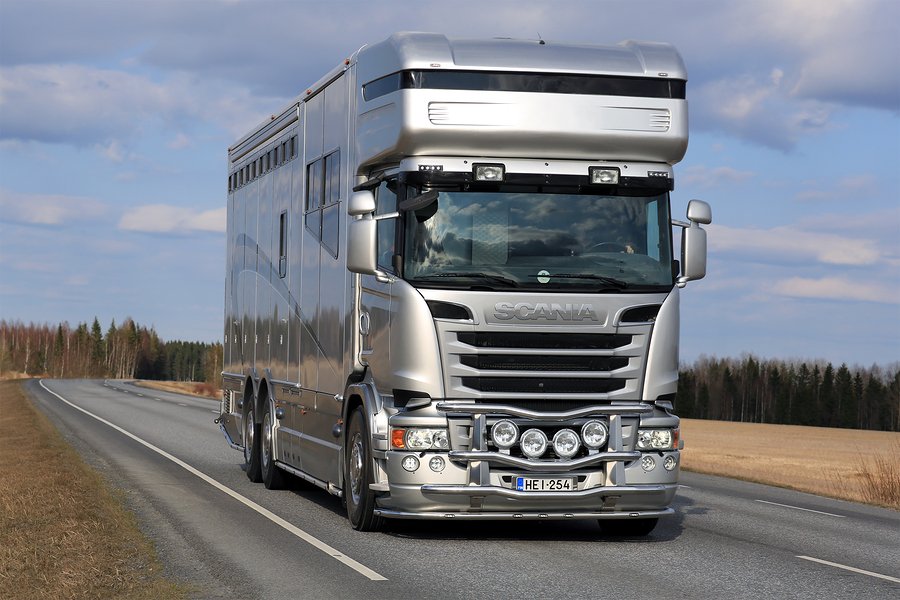
A horsebox used to transport horses on journeys lasting more than eight hours must have a certificate of vehicle approval. The horsebox must be inspected by an approved certifying body to make sure it meets the additional welfare requirements for long journeys. These can include suitable arrangements for:
- Ventilation
- Temperature monitoring
- Access to the horses
- Water
- Lighting
- Flooring
- Partitions
- Emergency procedures
A vehicle approval certificate is normally valid for up to five years. It may stop being valid sooner if you modify the vehicle in a way that affects animal welfare. You must carry a copy during relevant journeys.
Is vehicle approval the same as an MOT?
No. The annual MOT or HGV test checks whether the horsebox meets roadworthiness standards.
Animal-transport vehicle approval checks whether it meets the welfare requirements for transporting animals on longer journeys. A horsebox used for journeys over eight hours may need both.
Step 7: Keep an animal transport certificate for each journey
The animal transport certificate is another document that should not be confused with the certificate of competence. It is a written journey record containing information such as:
- The horses’ origin and ownership
- Where the journey begins
- The date and time of departure
- The intended destination
- The expected journey duration
You must carry a copy during the journey and keep it for at least six months after the journey ends. You can use the official UK Animal Transport Certificate template or keep the required information in another suitable written format.
For certain very long journeys, additional tracking and navigation-system requirements can also apply. For example, a suitable tracking system is required for relevant journeys involving unregistered domestic horses that last more than 12 hours within Great Britain or more than eight hours outside the UK.
Step 8: Check whether you need an operator’s licence
A goods vehicle operator’s licence is often called an O-licence. You will usually need one if you use a horsebox or vehicle-and-trailer combination commercially and its combined gross plated weight is over:
- 3,500kg in the UK or on international journeys
- 2,500kg when carrying goods for hire or reward in Europe
The requirement can apply even if the horsebox is only used commercially for a short period. A 3.5-tonne horsebox used only within the UK will not normally meet the weight threshold for an HGV operator’s licence. Other commercial transport, insurance and animal-welfare requirements can still apply.
Which type of operator’s licence do I need?
There are three main types.
Restricted operator’s licence
This may be appropriate if:
- The horsebox or combination has a MAM over 3,500kg
- The horses belong to your business
- You are carrying them as part of your own business rather than transporting them for someone else
For example, a professional yard transporting horses it owns may need a restricted licence.
Standard national operator’s licence
This will normally be the relevant licence if:
- The horsebox or combination is over 3,500kg
- You transport horses belonging to customers
- You operate within the UK
Standard international operator’s licence
You will normally need this if:
- You transport other people’s horses for payment
- You take them outside the UK
The official horsebox guidance distinguishes between restricted, standard national and standard international licences according to who owns the horses and where they are transported.
What is involved in getting an operator’s licence?
Applying for an operator’s licence is more involved than simply completing a short form. You will normally need to show that you have:
- A suitable operating centre where the vehicle will be kept
- Satisfactory maintenance arrangements
- Access to enough money to operate and maintain the vehicle safely
- Systems for daily checks, repairs and record keeping
- Suitable arrangements for managing drivers
- A qualified transport manager where required
The operating centre must be authorised on the licence. It is normally the base where the vehicle is regularly kept.
Do I need a transport manager?
A standard national or standard international operator’s licence requires a professionally competent transport manager.
The transport manager must hold the Transport Manager Certificate of Professional Competence and must effectively and continuously manage the business’s transport activities.You can:
- Qualify as the transport manager yourself
- Employ a qualified transport manager
- Use an external transport manager, subject to the applicable rules
A restricted operator’s licence does not normally require a qualified transport manager, but the operator is still responsible for understanding and following the rules. Apply for the correct operator’s licence before beginning transport work. DVSA can carry out roadside checks and may impound a vehicle being operated without the required licence.
Step 9: Arrange the correct insurance
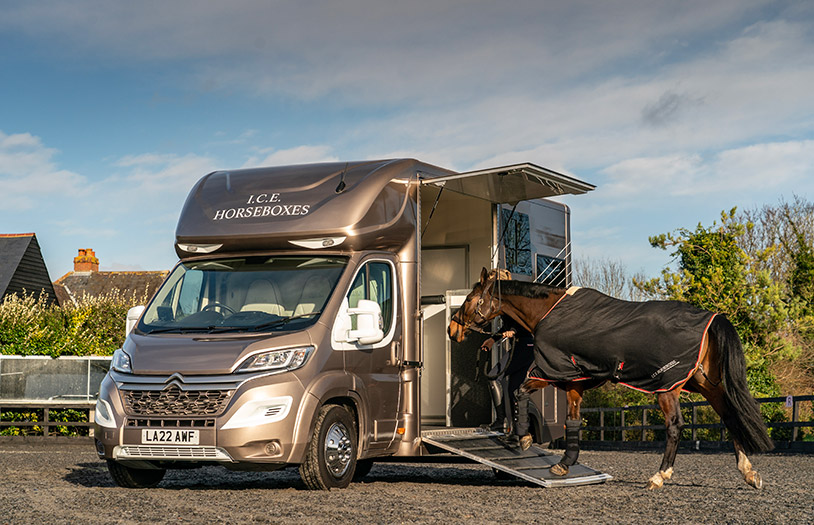
A personal horsebox policy or standard social, domestic and pleasure policy is unlikely to cover paid horse transport. Your motor insurance must cover the actual way the vehicle is used, including:
- Business use
- Commercial horse transport
- Hire or reward, where customers pay you to carry their horses
- Every person who will drive the vehicle
- The countries in which you will operate
Motor insurance is legally required when a vehicle is used by a business. You must tell the insurer when an existing vehicle is being used commercially. A specialist broker can also help you consider cover for:
- Horses in your care, custody or control
- Public liability
- Equipment carried in the horsebox
- Breakdown and horse recovery
- Legal expenses
- Loss of earnings
- Damage to the horsebox
- European travel
These additional policies are not all automatically required by law, but they may be important protection for the business. Make sure you understand:
- Any limit on the number or value of horses
- Whether loading and unloading are covered
- Whether an unattended horsebox is covered
- Any age or licence restrictions for drivers
- Whether emergency horse accommodation is included
- Which countries are covered
Ask the insurer to confirm the intended business use in writing.
What if I employ someone?
You will normally need Employers’ Liability insurance as soon as you become an employer. The policy must provide at least £5 million of cover from an authorised insurer.
Step 10: Understand tachograph requirements
A tachograph records:
- Driving time
- Breaks and rest
- Speed
- Distance travelled
- Other work
A horsebox or vehicle combination over 3,500kg will usually fall under the assimilated drivers’ hours rules and require a tachograph unless a specific exemption applies. Professional transporters should not assume that an exemption applies simply because the vehicle carries horses or is not used every day.
If a digital or smart tachograph is fitted, the driver will normally need a driver card. The operating business may also need a company card and systems for downloading, storing and checking tachograph data. The tachograph must be used correctly. It is not enough simply to have one fitted.
What are the main drivers’ hours limits?
Under the main assimilated rules, a driver must normally not drive more than:
- Nine hours in one day
- Ten hours in one day twice during a week
- 56 hours in one week
- 90 hours over two consecutive weeks
A break or breaks totalling at least 45 minutes must normally be taken after no more than four hours and 30 minutes of driving.
Daily and weekly rest rules also apply. These rules cover driving time, but drivers may also need to record other work, including:
- Loading and unloading
- Caring for horses
- Cleaning the vehicle
- Completing paperwork
- Vehicle checks
- Waiting time in some circumstances
Build legal breaks and rest into your bookings and prices. A journey cannot be planned safely if it relies on the driver exceeding their hours.
What about commercial horseboxes of 3.5 tonnes or less?
A commercial horsebox of 3,500kg or less will not usually fall under the main assimilated HGV rules for domestic UK journeys. However, commercial driving will normally still come under Great Britain’s domestic drivers’ hours rules.
For goods vehicles covered by those rules, the main limits include:
- No more than 10 hours of driving in a day
- No more than 11 hours on duty in a working day
Records may also be required. Different rules can apply on international journeys, so check the position before offering transport outside the UK.
Step 11: Create a vehicle-maintenance system
A commercial horsebox must be safe and roadworthy every time it is used. An annual MOT or HGV test is not enough on its own. Your maintenance system should include:
- Daily walkaround checks
- Written defect reports
- Prompt repairs
- Routine servicing
- Planned safety inspections
- Brake-performance checks
- Tyre management
- Annual testing
- Records of inspections and repairs
- Checks of the horse area, ramp, floor and partitions
Safety inspections are different from routine servicing. Their purpose is to examine safety-critical parts and confirm that the vehicle is roadworthy.
How often does a commercial horsebox need inspecting?
There is no single inspection interval suitable for every commercial horsebox. DVSA guidance says normal safety-inspection intervals can range from around four to 13 weeks, depending on factors including:
- Vehicle age
- Mileage
- Condition
- Type of work
- Load
- Terrain
- Manufacturer recommendations
- Previous defects
The guidance gives six weeks as the usual maximum starting interval for vehicles and trailers aged 12 years or older. A six-week inspection is therefore common, but it is not a rule that automatically suits every vehicle. When applying for an operator’s licence, you will state the inspection interval you intend to use. You must then follow that schedule and review whether it is keeping the vehicle roadworthy.
What records should I keep?
Your records should include:
- Daily walkaround and defect reports
- Repairs
- Safety inspections
- Services
- Brake tests
- Tyre checks
- MOT or annual-test results
- Tachograph downloads
- Drivers’ hours
- Driver training
- Animal transport certificates
- Transporter authorisations
- Certificates of competence
- Vehicle approval documents
- Insurance documents
DVSA says safety-inspection and repair records should be kept for at least 15 months as part of the vehicle’s maintenance history. Animal transport certificates must be kept for at least six months after the journey. Keep the records organised and available for inspection rather than relying on invoices or messages spread across different systems.
Step 12: Make sure the vehicle is suitable for horses

Passing an MOT does not automatically make a vehicle suitable for transporting horses. Check that the horse area has:
- A sound, non-slip floor
- Strong and suitable partitions
- Secure breast and breeching bars
- Safe loading ramps
- Suitable ventilation
- Enough internal height and space
- No sharp edges or loose fittings
- Suitable lighting
- Safe doors and emergency exits
- Access for checking the horses
The horsebox must be maintained and operated in a way that avoids injury, suffering and escape. You must also make sure each horse is fit to travel and that the vehicle is not overloaded.
Step 13: Prepare emergency procedures
Before accepting bookings, decide what you will do if:
- The horsebox breaks down
- A horse becomes injured or unwell
- A horse will not load
- A journey is delayed
- A road is closed
- The driver reaches their legal hours limit
- The vehicle is involved in an accident
- A customer cannot be contacted
- Emergency overnight stabling is required
Your breakdown policy should cover a commercial horsebox and arrangements for the horses, not only the recovery of the vehicle. Carry useful contact details for:
- Your breakdown provider
- A veterinary surgeon
- The customer
- Your insurer
- Emergency stabling
- A replacement transporter
- Your maintenance provider
Written terms and conditions should also explain what happens if a journey cannot continue safely.
Do I need to be “DEFRA approved”?
People sometimes describe a transporter as “DEFRA approved”, but there is not one single certificate that covers the whole business. Instead, you may need several separate documents administered or recognised by government bodies, including:
- A transporter authorisation
- An animal transport certificate of competence
- A vehicle approval certificate
- Journey records
- An operator’s licence
Check exactly which document a person means rather than relying on the general phrase “DEFRA approved”.
What if I transport horses abroad?
International transport can require additional documents and rules covering:
- Standard international operator licensing
- International Driver CPC
- Tachograph equipment
- Animal-health documents
- Customs
- Horse passports
- Export health requirements
- Journey logs
- Transporter authorisation recognised by the destination country
- Vehicle approval recognised outside Great Britain
A UK-issued animal transport authorisation or certificate may not automatically be accepted for entry into the EU. Check the requirements for every country on the route before advertising international transport.
Professional horse transporter checklist
Before taking paid bookings, confirm that:
- You hold the correct driving licence
- You have Driver CPC if required
- You hold the correct animal transport certificate of competence
- Your transporter authorisation covers the journeys you offer
- Your vehicle is approved if you undertake journeys over eight hours
- You have the correct operator’s licence
- A qualified transport manager is in place where required
- Your insurance covers commercial horse transport
- Your tachograph and drivers’ hours systems are ready
- You have an appropriate maintenance and inspection schedule
- Daily checks and defect-reporting systems are in place
- You have templates for animal transport records
- Your emergency and breakdown arrangements cover the horses
- You understand the additional rules for international journeys
Do not begin trading until you have confirmed that all the requirements applying to your vehicle and service are in place.
Find professional horsebox driver training
If your horsebox has a maximum authorised mass over 3,500kg, you will normally need a Category C1 or Category C licence. Professional drivers may also need the additional tests for Driver CPC.
Use Horsemart’s HGV training-centre directory to find a provider near you. Explain that you plan to work as a professional horse transporter so the centre can help you identify the correct driving-licence and Driver CPC route. The separate animal transport certificate of competence must be completed through an appropriate animal-transport training and assessment provider.
This guide mainly covers the rules applying in England, Scotland and Wales. Separate application processes and operator-licensing arrangements apply in Northern Ireland. Commercial transport requirements depend on the exact vehicle, business and journey, so confirm your position with APHA, DVSA, the Office of the Traffic Commissioner, your insurer and a suitable professional adviser before trading.