Improving & Accelerating Equine Recovery - How Hyperbaric Oxygen Therapy Is Revolutionising Horse Health & Wellbeing
Understanding Injuries and Modern Healing for Horses
Over the decades of domestication, we have become more aware of complex health challenges faced by our equine friends, whether they are elite performance horses, such as showjumpers or racehorses, or beloved pets and happy hackers. In this article, we examine some of the common problems and injuries horses can experience, as well as traditional solutions, while introducing a new type of treatment that has been proven to accelerate and improve recovery.
Common equine health conditions and the traditional treatment approaches
Firstly, let's explore some of the common injuries and complications that horses experience.
Laminitis
Laminitis is a debilitating inflammatory condition within the hoof's sensitive tissues. It can frequently cause severe pain and potentially life-threatening consequences. Laminitis most commonly affects "good-doers" who are not using enough energy to expend their sugar intake, meaning they store it instead. However, any horse can get laminitis if their blood sugar is too high, similarly to Type 2 diabetes.
"It often recurs in individual animals and around 15% of equine deaths in the UK are linked to laminitis."
Source: Royal Veterinary College, University of London, August 2023
A recent study showed that:
"One in 10 horses or ponies may develop at least one laminitis episode each year, making it just as common as colic, according to a new study led by Dr Danica Pollard, a PhD student at the Royal Veterinary College..."
Source: Royal Veterinary College, University of London, August 2023
What is the solution if your horse has laminitis?
- Traditional solutions: Stall rest, anti-inflammatory medications, corrective shoeing, and strict dietary control.
- Limitations: Despite aggressive management, laminitis can progress rapidly; recovery is slow and prone to recurrence. Severe cases may result in euthanasia, representing a significant welfare concern.
Tendon and Ligament Injuries
"Both ligaments and tendons can be injured through sudden traumatic accidents or ongoing stress caused by overworking the muscles or joints. These kinds of injuries can cause severe pain and lameness that prevent the horse from moving easily."
Source: Park City Equine.com, May 2025
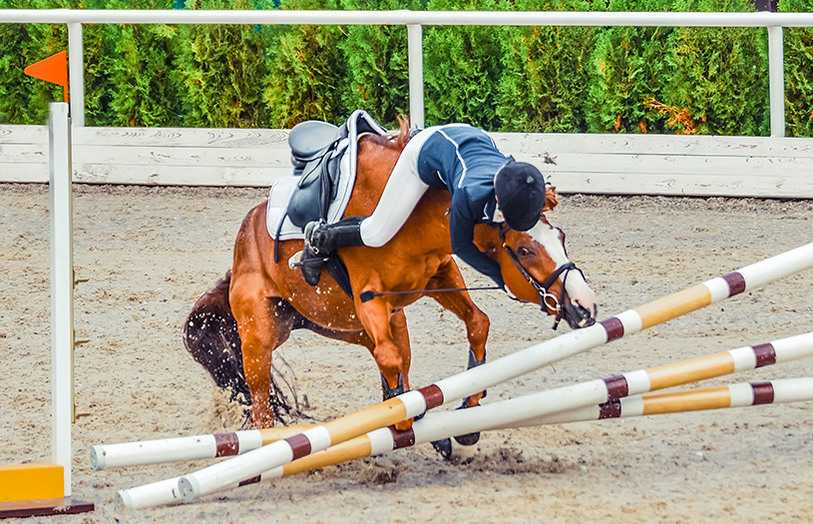
Racehorses and competition horses frequently experience tendon strains, pulled muscles, and ligament tears. These are tissues that bear immense mechanical loads and can heal very slowly. Furthermore, scar tissue formation can weaken repaired structures, which leads to an increased risk of further injury.
How can your horse heal from ligament or tendon injuries?
- Traditional solutions: extended rest, controlled rehabilitation, ultrasound therapy, and regenerative approaches like stem cell treatment or platelet-rich plasma (PRP).
- Limitations: downtime can often last for months. Unfortunately, there are high re-injury rates due to incomplete healing and tissue fibrosis.

Bone and Joint Infections
Septic arthritis and osteomyelitis affect horses of all ages, including foals. These infections penetrate bone and joint tissues, which are notoriously difficult for systemic antibiotics to reach, often leading to chronic lameness or euthanasia.
One major type of infection is synovial, e.g. bursae, joints and tendon sheaths.
"Overall, synovial infections have a good prognosis, with between 84-90% of adult horses recovering with appropriate treatment. Around 50% of horses return to their previous athletic performance, with some studies showing as high as 89% returning to some level of athletic function."
Source: Dr. Madison Ricard, DVM, PhD, DACVP, PAS, Jan 2024
What are the solutions to bone and joint infections in horses?
- Traditional solutions: These include aggressive antibiotic therapies, joint flushing, and surgical debridement.
- Limitations: Antibiotic penetration is limited in avascular bone regions, and infections can persist despite treatment.
Respiratory and Circulatory Issues
Respiratory diseases are common in horses and have many causes. Infectious types, such as strangles and influenza, affect horses of all ages but are especially frequent in young horses kept in groups. This is due to their immune systems not being as developed, so they're more susceptible to harmful bacteria.
Non-infectious conditions are often linked to stable allergens, including inflammatory airway disease in younger horses and equine asthma (formerly RAO, COPD, or 'heaves') in older horses.
What are the traditional solutions for respiratory and circulatory problems in horses?
- Traditional solutions: These include antibiotics, anti-inflammatory drugs, rest, and oxygen supplementation.
- Limitations: Conventional oxygen therapy may not sufficiently oxygenate damaged or inflamed tissues. This can lead to prolonged recovery and potential permanent performance loss.
Gastrointestinal and Post-Surgical Recovery
"Perioperative complications contribute to equine morbidity and mortality, and are a significant concern for horse owners and veterinary surgeons alike. Postoperative complications can prolong recovery, increase cost, decrease the quality of life for the patient and negatively impact survival (Tyma and Epstein, 2023)."
Source: Kate Loomes, Vet Times, May 2024
Postoperative complications in horses can worry both owners and vets because they can slow recovery, raise costs, and even threaten survival.
Problems range from mild to life-threatening, with gastrointestinal issues the most common. Colic, diarrhoea, reduced faecal output, and ileus are frequently seen, especially after colic surgery.
Other risks include cardiovascular problems like jugular thrombosis, respiratory issues such as pneumonia or pulmonary oedema, and musculoskeletal conditions like myopathy, neuropathy, or laminitis.
What are the traditional solutions to gastrointestinal and Post-Surgical Recovery?
- Traditional solutions: Awareness and prompt action are crucial. Solutions include surgical correction, intravenous fluids, and motility-restoring medications.
- Limitations: Healing processes are slow, with frequent complications and risk of setbacks during rehabilitation.
Neurological and Foal Conditions
"Neonatal encephalopathy (dummy foal syndrome) is the most common cause of neurological signs in neonatal foals. However, there are a wide variety of other causes that may be overlooked, including infections, traumatic, metabolic and congenital causes."
Source: Vet Equine. Com, Jan 2022
Injuries to equines, such as perinatal asphyxia, CNS edema, head trauma, and neuropathies, can require intensive care and carry uncertain prognoses.
What are the solutions for neurological and foal conditions?
- Traditional solutions: Usually, treatment includes oxygen therapy, intravenous fluids, anticonvulsants, and supportive care.
- Limitations: Neurological tissues respond slowly to injury; long-term deficits are common.
A New Way To Heal Your Horse: Pegasus Hyperbaric Chambers
What is Hyperbaric Oxygen Therapy?
'Pegasus' is a unique, Hyperbaric Oxygen Therapy (HBOT) chamber. It is one of the most exciting and innovative therapies available. It is already in use across many states in the USA, Dubai, and other leading equine centres worldwide, delivering proven results at the highest levels of equine sports.
Hyperbaric is now the Leading-edge Equine recovery treatment. Founder and design engineer of Hyperbaric Chambers International John Dimmock has spent decades perfecting the PEGASUS HBOT into state-of-the-art, innovative therapy.
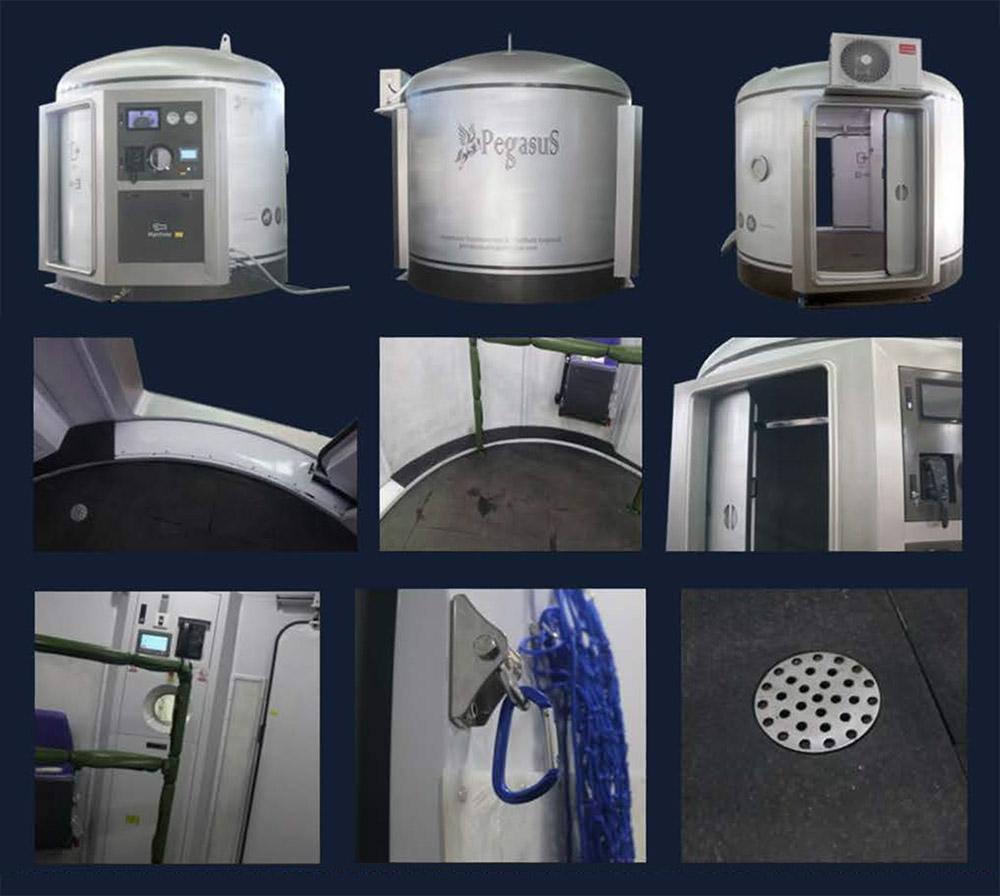
Hyperbaric oxygen therapy (HBOT) for horses offers many benefits, primarily focused on enhancing healing and recovery from various conditions. It involves exposing the horse to increased atmospheric pressure and higher oxygen concentrations. This helps to increase oxygen delivery to tissues, reduce inflammation, and promote faster healing.
Hyperbaric Oxygen Therapy is already used by top human athletes, such as Cristiano Ronaldo and LeBron James, to ensure they recover efficiently and compete at the highest level consistently.
Find out more about Hyperbaric Chambers: Watch this video now >
Features and Benefits of Hyperbaric Oxygen Therapy for Horses:
Improved Wound Healing
HBOT is particularly effective in promoting the healing of wounds by increasing oxygenation to the affected tissues.
Reduced Inflammation: The increased oxygen levels (93%) can help to modulate the inflammatory response, which is crucial for managing conditions like arthritis, tendonitis, and laminitis. It helps horses return to peak performance faster
Faster Recovery from Injuries: Hyperbaric Oxygen Therapy can accelerate recovery from various injuries, e.g. tendon and ligament damage, by reducing inflammation, promoting tissue repair, and minimising scarring.
Treatment of Infections: Treatment of aerobic and anaerobic infections, as well as bone infections (osteomyelitis), by increasing oxygen to fight off pathogens. Hyperbaric Oxygen Therapy can help with surgical recovery, such as horses recovering from colic surgery and other procedures, as it oxygenates damaged tissues, restores blood flow, and reduces swelling.
Enhances Performance and Recovery: HBOT may improve athletic performance by increasing oxygen delivery to muscles post-exercise.
HBOT may improve athletic performance by increasing oxygen delivery to muscles post-exercise.
Breeding Support: Improves healing and circulation during the breeding process.
Condition-Specific Benefits: Effective for laminitis, foot injuries, ligament damage, and osteomyelitis.
All-Age Effectiveness: From 1-year-old Colts to 20+-year-old Veterans, the benefits are consistent across the age spectrum.
Research Supporting HBOT in Equine Medicine
There are a growing number of scientific studies that support the efficacy of hyperbaric chamber treatment for equines, including:
- The Journal of Equine Veterinary Science (2008) published a comprehensive review noting that "hyperbaric oxygen therapy appears to be a promising adjunctive treatment for a variety of equine disorders, including laminitis and other ischemic injuries." - Source: Researchgate.net, 2008
- A Veterinary Clinics of North America: Equine Practice (2016) article corroborated these findings, describing HBOT as "a safe treatment option with very few side effects when administered properly." - Source: PubMed, 2019
- According to a multi-centre clinical review published in the Journal of Equine Veterinary Science (2023), HBOT has helped reduce healing times by an average of 25-30% in conditions including laminitis, tendon injuries, bone infections, and respiratory diseases.
- Moreover, a cohort study at Hagyard Equine Medical Institute found horses receiving adjunct HBOT following tendon and ligament injuries returned to work 6 weeks earlier on average compared to controls treated with standard care alone.
Conclusion
Equine injuries and illnesses are complex, and while traditional treatments remain essential, they often cannot restore full health quickly.
Hyperbaric oxygen therapy enhances oxygen delivery to accelerate healing, reduce complications, and help horses return to peak performance.
If you are an equine rehabilitation centre, a racehorse trainer, or another type of business housing top equine athletes, hyperbaric oxygen therapy can help keep your horses firing on all cylinders and take your operation to another level.
Want to find out more about Pegasus Hyperbaric Chambers?
Please contact our team below:
View our website here: https://www.hyperbaricci.com
Contact Us
Sales & Customer Support
Nicholas Andrews: +44 (0)7803 003 583 | [email protected]
Technical Enquiries
John Dimmock: +44 (0)7847 520 057 | [email protected]
Disclaimer
This article is for educational purposes only and does not substitute professional veterinary advice. Always consult a licensed veterinarian regarding the diagnosis and treatment of equine conditions.