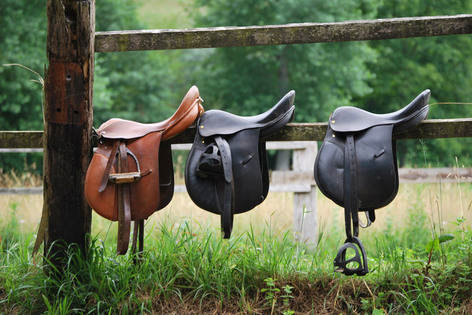
Buying a second-hand saddle can be a great way to find a quality saddle for less, with plenty of used GP, dressage, jumping and other saddles available from private sellers and equestrian businesses.
But a saddle isn't something to buy on appearance alone. Its condition, history and, most importantly, its suitability for your horse all need to be considered before you commit.
Whether you're shopping online or viewing a saddle in person, here's what to check before buying a second-hand saddle.
1. Know what type of saddle you're looking for
Before you start browsing, have a good idea of the type of saddle you need.
A general purpose (GP) saddle can suit riders who do a mixture of flatwork, hacking and jumping, while more specialised saddles are designed around particular disciplines. Dressage saddles typically have a straighter-cut flap to accommodate a longer leg position, while jumping saddles have a more forward-cut flap to support a shorter stirrup length.
If you're replacing an existing saddle, don't assume that buying the same seat size or width will guarantee the same fit. Saddle sizing and shape can vary between manufacturers and models, while your horse's shape may also have changed since their current saddle was fitted.
Looking for a saddle? Browse new and second-hand saddles for sale on Horsemart.
2. Ask for plenty of clear photographs
When buying a saddle online, the advert photos are your first opportunity to assess its condition.
Don't be afraid to ask the seller for additional photographs if something isn't clear. Ideally, you want to see:
- The saddle from both sides
- The front and back
- The seat
- The underside and panels
- The girth straps/billets on both sides
- Stitching and D-rings
- Any areas of obvious wear or previous repair
- The serial number or manufacturer's markings, where applicable
Good close-up photographs can reveal wear, cracking, unevenness or repairs that aren't obvious in a single side-on image.
If you're buying privately and can't inspect the saddle before paying, it's worth asking whether the seller will accept a return if the saddle arrives significantly different from its description.

3. Check carefully for wear or damage
Some cosmetic wear is to be expected on a used saddle and doesn't necessarily make it unsuitable. What matters is distinguishing everyday signs of use from damage that could affect its safety.
Look closely at the leather. It should feel supple rather than excessively dry, cracked or brittle.
Pay particular attention to the girth straps, as these are an area where wear can have safety implications. Check for cracking, stretched holes, damaged stitching and excessive wear.
Also inspect the pommel and cantle for significant scuffs or damage. These can sometimes indicate that a saddle has been dropped or involved in a fall.
If you notice evidence of a previous repair, ask the seller what happened, when the repair was completed and who carried out the work.
When in doubt about a saddle's condition, have it inspected by a suitably qualified saddler before using it.
4. Consider the condition of the tree
The tree forms the internal structure of many saddles, so damage isn't always obvious from looking at the outside.
Changes in the shape of the seat, unusual creases or ripples, asymmetry or excessive movement can potentially indicate a problem.
The British Horse Society and Society of Master Saddlers advise that a saddle with a damaged tree shouldn't be used. If you're buying privately, having the saddle checked by a qualified saddler can help identify issues that may not be visible to an untrained eye.
This is particularly worthwhile if you're considering an older saddle or don't know its full history.
5. Look underneath the saddle too
It's easy to concentrate on how a saddle looks from above, but the underside is particularly important.
Check the panels for obvious unevenness, lumps or damage. A used saddle will have settled to some extent through being ridden in on another horse, so it may need adjustment or reflocking before being suitable for yours.
This is one of the reasons professional fitting is important even if you've bought a make, model and size you've used before.
6. Ask about the saddle's history
A few simple questions can give you much more information than the advert alone. Ask the seller:
- How old is the saddle?
- How long have they owned it?
- Why are they selling it?
- Has it ever been damaged?
- Has it had any repairs?
- Has it been reflocked or adjusted?
- When was it last checked by a saddler or saddle fitter?
- What horse was it previously used on?
- What exactly is included in the sale?
Someone may simply be selling because their horse has changed shape, they've changed disciplines or they've bought a different saddle. What's important is getting as much information as possible so you can make an informed decision.

7. Don't assume the saddle will fit your horse
Finding the correct saddle is about much more than matching a width and seat size.
Horses can vary considerably through their back, withers, shoulders and overall conformation. Their shape can also change with age, fitness, weight and muscle development.
A saddle that fitted its previous horse perfectly won't necessarily fit yours.
The British Horse Society and Society of Master Saddlers recommend having a second-hand saddle fitted by a qualified saddle fitter. A professional can assess the saddle on your horse and identify whether adjustments, such as reflocking, may be required.
Even if the saddle appears to sit correctly when you first put it on, this isn't a substitute for a professional assessment.
8. Be cautious when buying online
Thousands of equestrian items are bought and sold online, but it's sensible to take a few precautions when dealing with someone you don't know.
Be wary if a seller is unwilling to answer reasonable questions, provide additional photographs or give you basic information about the saddle.
If you're concerned that photographs may have been copied from another advert, you can ask for a new photograph showing the saddle alongside a piece of paper with the current date or another detail you've requested.
Be particularly cautious if you're being pressured into making a quick payment or moving away from a marketplace's usual communication or payment process.
If something doesn't feel right, don't feel pressured into completing the purchase simply because the saddle appears to be a bargain.
9. Understand how you're paying
Before sending any money, make sure you understand the payment method you're using and what buyer protection, if any, applies to the transaction.
Keep a copy of the advert, your conversations with the seller, photographs and proof of payment.
If you're buying from a business, check its terms and conditions, returns policy and whether it offers a trial or fitting service.
If you're buying privately, establish before paying whether a return will be accepted if the saddle isn't suitable. Don't assume you'll automatically be able to return a privately purchased saddle simply because it doesn't fit your horse.
10. Arrange a professional saddle fitting
Finding a second-hand saddle in the right general size and style is only the first part of the process.
Before riding in it, arrange for a qualified saddle fitter to assess it with your horse.
They can look at the saddle's balance, clearance, panel contact and overall suitability for both horse and rider, as well as advising whether any adjustments are needed.
Remember that saddle fit isn't static, either. Your horse can change shape as their workload, fitness, weight and muscle development change, so a saddle that fits now may need checking again in the future.
Second-hand saddle buying checklist
Before agreeing to buy, check that you have:
- Confirmed the make, model, seat size and other available measurements
- Seen clear photographs from every angle
- Checked the leather, stitching and girth straps for wear
- Looked for signs of previous damage or repairs
- Asked about the saddle's age and history
- Confirmed exactly what's included
- Agreed how payment, collection or delivery will work
- Checked any applicable returns or trial terms
- Arranged for the saddle to be professionally checked and fitted
Taking a little extra time before buying can help you avoid ending up with a saddle that's unsuitable, damaged or going to cost significantly more to put right.
Find second-hand saddles for sale
Ready to start looking?
Horsemart has new and second-hand saddles advertised across the UK, from general purpose and dressage saddles to jumping, showing and other specialist saddles.
Browse saddles for sale on Horsemart and compare the latest saddles available from private sellers and equestrian businesses.